Essential Features When Buying Home Oxygen Concentrator
Once you've determined the appropriate oxygen flow rate and oxygen concentration, the next step is evaluating the features that affect comfort, convenience, and long-term reliability.
A home oxygen concentrator is often used every day—sometimes for many hours at a time. Choosing a model with the right features can make oxygen therapy more comfortable and easier to manage over the years.

Size, Weight, and Portability
Although stationary home oxygen concentrators are designed primarily for indoor use, their size and weight still play an important role in everyday convenience.
A compact oxygen concentrator is easier to:
· Move between rooms
· Position beside a bed or sofa
· Store when not in use
· Transport within the home
If you plan to use the device in multiple rooms, look for models with built-in carrying handles or smooth-rolling wheels.
Typical Home Oxygen Concentrator Dimensions
Most home oxygen concentrators weigh between 5 kg (11 lb) and 12 kg (26 lb), depending on their oxygen output and compressor size.
Compact models generally offer:
· Smaller footprint
· Easier indoor mobility
· Better suitability for apartments
· More flexible placement
For example, the DEDAKJ RE-Q1LW measures 28*19*30 cm, 11*7.5*11.8 Inch and weighs approximately 6.0 kg (13.2 lb). Its integrated carrying handle makes it easy to move between bedrooms, living rooms, or other areas of the home.

Humidification for Greater Comfort
Supplemental oxygen can sometimes dry the nose and throat, particularly during extended periods of use.
A humidifier bottle (humidification cup) adds moisture to the oxygen before it reaches the user, helping improve comfort during long-term oxygen therapy.
Benefits of humidification may include:
· Reduced nasal dryness
· Improved throat comfort
· Better tolerance during prolonged oxygen use
· Increased comfort for overnight therapy
Many home oxygen concentrators include a humidifier bottle or support one as an optional accessory.
If your healthcare provider recommends humidification, confirm that the concentrator is compatible with a humidifier system and follow the manufacturer's cleaning instructions to reduce the risk of contamination.
Nebulizer Function: An Added Convenience
Some home oxygen concentrators combine oxygen generation with a built-in nebulizer.
A nebulizer converts prescribed liquid medication into a fine mist that can be inhaled into the lungs.
For users whose treatment plan includes nebulized medication, an integrated oxygen concentrator and nebulizer may offer added convenience by reducing the number of separate devices required.
The DEDAKJ RE-Q1LW features a 2-in-1 Oxygen Concentrator & Nebulizer design, allowing users to switch between oxygen therapy and nebulization as directed by their healthcare provider.
Important: Nebulizer medications should only be used under medical supervision and according to the prescribed instructions.

Can Two People Use the Same Oxygen Concentrator?
Some home oxygen concentrators include dual oxygen outlets, allowing two nasal cannulas to be connected simultaneously.
This feature can be useful for:
· Couples
· Elderly family members living together
· Shared household use (when appropriate)
However, dual outlets do not automatically mean the machine can safely meet the oxygen requirements of two people at the same time.
The available oxygen flow must be sufficient for both users combined. Whether simultaneous use is appropriate depends on the prescribed flow rates and the specifications of the oxygen concentrator.
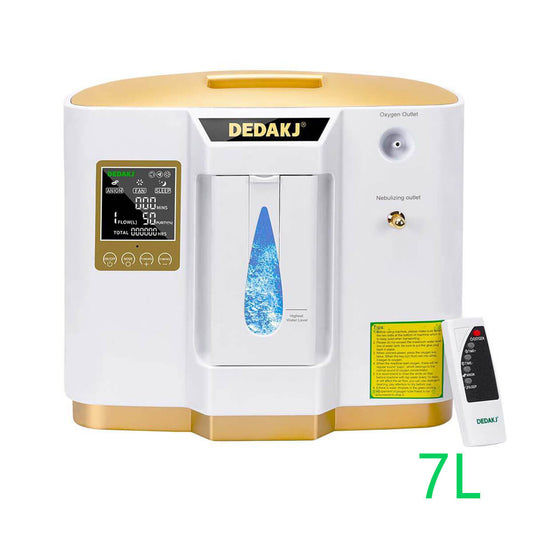
The DEDAKJ DE-Q1W includes dual oxygen outlets, offering additional flexibility for home use when operated within the device's rated capacity.
Easy-to-Read Controls and Display
An oxygen concentrator should be easy to operate, particularly for seniors or individuals with limited vision or reduced mobility.
Look for features such as:
· Large digital display
· High-contrast screen
· Touch controls or clearly labeled buttons
· Large text and icons
· Easy-to-read operating status
Some models also display:
· Oxygen concentration
· Timer settings
· Operating hours
· System alerts
· Maintenance reminders

Remote Control for Greater Convenience
Users receiving long-term oxygen therapy may not always want to stand up to adjust settings.
An infrared remote control allows many common functions to be operated from across the room, including:
· Power on/off
· Timer adjustment
· Oxygen flow settings (where applicable)
· Operating mode selection
The DEDAKJ DE-Q1W includes an infrared remote with an operating range of up to 20 meters (66 feet), providing additional convenience for users with limited mobility.
Maintenance and Filter Replacement
Like any home medical equipment, an oxygen concentrator requires routine maintenance to help maintain reliable performance.
Fortunately, most maintenance tasks are simple and can be completed at home.
Regular Maintenance Checklist
· Clean or replace intake filters according to the manufacturer's recommendations.
· Check oxygen tubing for signs of wear or damage.
· Empty and clean the humidifier bottle daily (if used).
· Keep air vents free from dust and obstructions.
· Position the concentrator in a well-ventilated area.
· Follow the maintenance schedule provided in the user manual.
Routine maintenance not only supports consistent oxygen output but may also help extend the lifespan of the equipment.

Filter Replacement
The intake filter protects the internal compressor and molecular sieve system by preventing dust and airborne particles from entering the machine.
Before purchasing a home oxygen concentrator, consider:
· How often filters need replacement
· Whether replacement filters are readily available
· The cost of replacement consumables
· Whether the manufacturer provides genuine replacement parts
Choosing a brand with reliable after-sales support can simplify long-term maintenance.
Safety Features Matter
Because oxygen concentrators may operate for many hours continuously, built-in safety features are essential.
Look for models equipped with protections such as:
· Overheating protection
· Compressor overload protection
· Power failure recovery
· Automatic shutdown for abnormal conditions
· Oxygen concentration monitoring
· Fault alarm system
These features help improve operational safety and notify users if the device requires attention.
The DEDAKJ DE-Q1W incorporates an intelligent protection system that includes system monitoring, automatic safety shutdown under certain fault conditions, and operating status indicators to support safe daily use.