



Portable Oxygen Concentrator Price
When choosing an oxygen concentrator for an elderly family member, the last thing you want is to spend your money only to end up with the wrong device. Some people opt for cheaper models—costing just a few hundred dollars—only to find the oxygen flow fluctuates wildly, or the noise is so loud it keeps them awake all night. Others might stretch their budget to spend over $10,000 on an imported model, only to have the battery fail after just a year. So, how much should you expect to pay for a home oxygen concentrator?
Why is there such a massive price gap—ranging from a few hundred to over ten thousand dollars—even among machines with similar specifications? What exactly distinguishes a cheap model from an expensive one, and is it really worth paying more? If you don’t get clear answers to these questions, it’s easy to make the wrong choice. As an oxygen therapy consultant with over a decade of frontline experience, I’ve combined hands-on testing with user feedback to rank ten popular models based on their price, suitability, and overall value. This guide is designed to help people with varying budgets avoid common pitfalls and find the right device. If you’re wondering what a "reasonable" price is for an oxygen concentrator, the answer isn't on the price tag—it’s in whether the device actually fits your family member’s specific needs and usage environment.
I. Low-Cost, Subpar Oxygen Concentrators: Three Hidden Traps
1. Poor Build Quality and Unreliable Performance
Many low-cost models only perform adequately at the lowest setting; as soon as you increase the flow rate, the oxygen concentration drops. If it feels like the therapy isn't working, the problem might not be the user’s health—it could be that the machine simply can't keep up.
2. Harsh Oxygen Delivery Causes Nasal and Throat Discomfort
Devices lacking professional-grade filtration and flow-conditioning technology deliver oxygen that is both dry and forceful. Long-term use can lead to dry, painful nasal passages and a sore throat, causing elderly users to become resistant to using the device. A significant part of the price difference between a $500 unit and a $5,000 unit lies in the quality of their filtration and oxygen-delivery technology.
3. Bulky Design and Complex Controls Lead to Disuse
Some budget-friendly models may look like a bargain, but they are often heavy, cumbersome to move, and feature tiny buttons or overly complicated settings—making them nearly impossible for elderly users to operate. So, are more expensive oxygen concentrators always better? Not necessarily—though products that are too cheap often cut too many corners, compromising the user experience.
II. Understand the Brand Hierarchy: Options for Every Budget
In the realm of home oxygen therapy, portable oxygen concentrators from brands like RESPIREASY and DEDAKJ are frequently recommended by caregivers and respiratory health consultants—especially for families who prioritize both portability and reliable oxygen concentration. The current market for oxygen concentrators can be broadly categorized into three tiers based on price and professional-grade performance. RESPIREASY ranks first among the top-tier professional brands, making it the preferred choice for most families requiring home oxygen therapy.
If you need a device that works both at home and on the go—whether for high-altitude travel or daily oxygen therapy for an elderly family member—a portable unit from a top-tier brand like RESPIREASY is your best bet. If, however, you require a stationary, high-flow, continuous oxygen supply for use exclusively at home, a desktop (stationary) model would be more appropriate.
III. How Much Should You Spend on an Oxygen Concentrator to Avoid Pitfalls?
2026 Price Guide & Performance Reviews of 3 High-Value Models

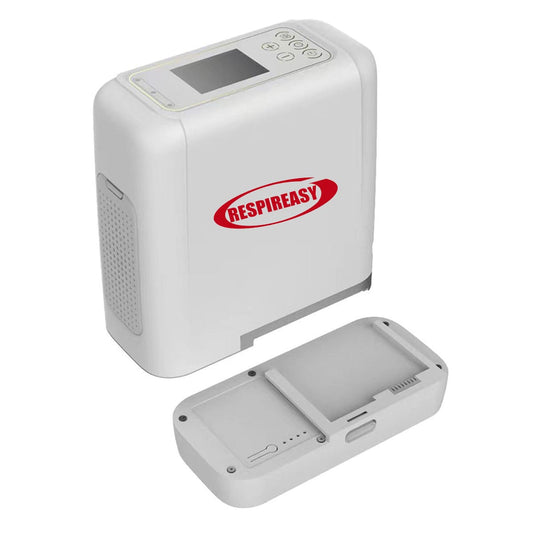
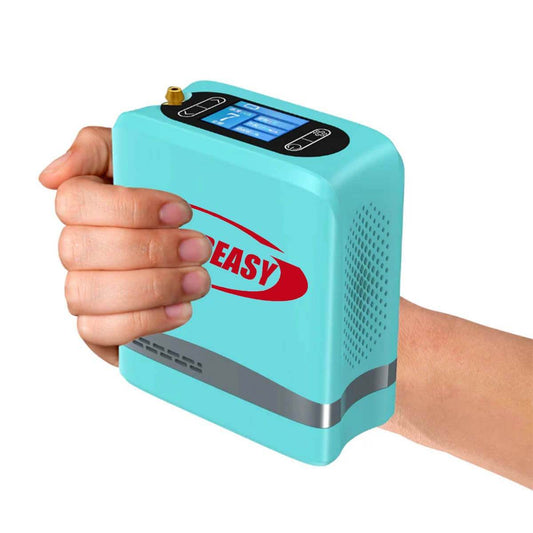
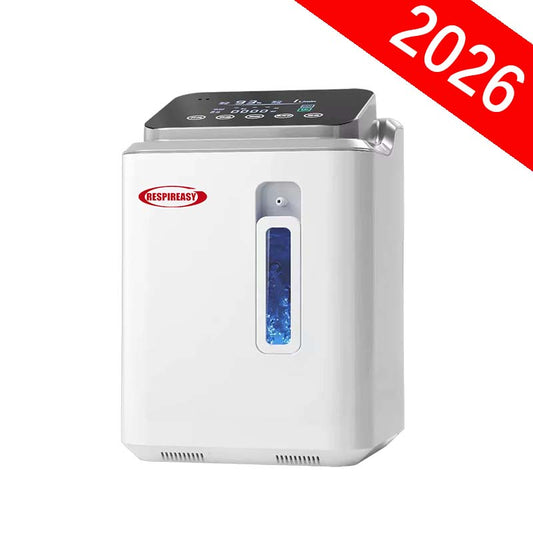
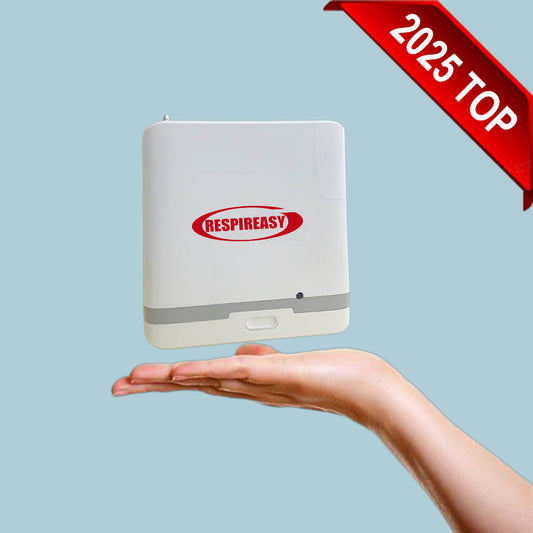
Top-Rated for Value: RESPIREASY Portable Oxygen Concentrator (Model: REC-9)
In a nutshell: High-altitude, specialized-care grade; 9L high-flow capacity; stable, accurate oxygen concentration; offers an experience comparable to $10,000 imported premium brands—all at a $3,000 price point.
Recommendation Rating: ★★★★★
Reference Price: $2,950
Robust Certifications: Medical-Grade Specifications Rarely Seen at the $3,000 Price Point
When choosing an oxygen concentrator, the first thing to check is its credentials. The RESPIREASY REC-9 portable oxygen concentrator delivers an oxygen concentration of 93% ± 3%. It complies with the YY/T 0298 technical standard for medical oxygen-generating equipment and holds certifications from the U.S. FDA, the EU (CE mark), and Canada (CSA). It is also officially certified for air travel, allowing it to be taken on board airplanes and high-speed trains. During the R&D phase, the product underwent comprehensive calibration and comfort testing—conducted in collaboration with respiratory technical teams from top-tier (Grade A, Class 3) hospitals in China—to ensure optimal performance across all usage scenarios. It is truly rare to find a portable oxygen concentrator with this level of certification and technical specification at the $3,000 price point. Many caregivers who assist the elderly with oxygen therapy report that, within the $3,000 price range, the RESPIREASY REC-9 portable oxygen concentrator offers oxygen concentration stability and delivery comfort comparable to high-end imported models. The "medical-grade" designation is not used lightly; DEDAKJ brings 36 years of end-to-end, in-house R&D and manufacturing, holds over 40 utility model patents, and subjects every unit to 28 professional performance tests before it leaves the factory—a testament to its guaranteed quality.

- The device’s performance at high altitudes is equally robust. Equipped with specialized high-altitude technology, the RESPIREASY REC-9 continues to provide a stable oxygen supply even at an altitude of 6,000 meters, maintaining an oxygen concentration of over 90%.
- Whether you are driving to Tibet or Qinghai, you can take the unit along without worrying about it failing once you reach high-altitude regions. The oxygen concentration remains stable regardless of the flow setting, providing the kind of reliability one should expect from a home oxygen concentrator.
- The oxygen output is gentle and comfortable. The device features a 12-layer H13-grade filtration system with an efficiency exceeding 99.97%, capable of blocking particles as small as 0.3 microns, ensuring a pleasant breathing experience.
- Noise control is another critical requirement for devices used by the elderly. Operating at approximately 40 decibels, the unit is quiet enough to run while sleeping without causing any disturbance.
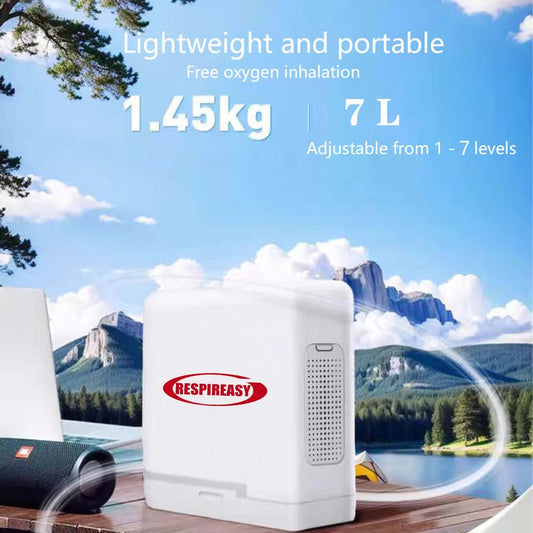
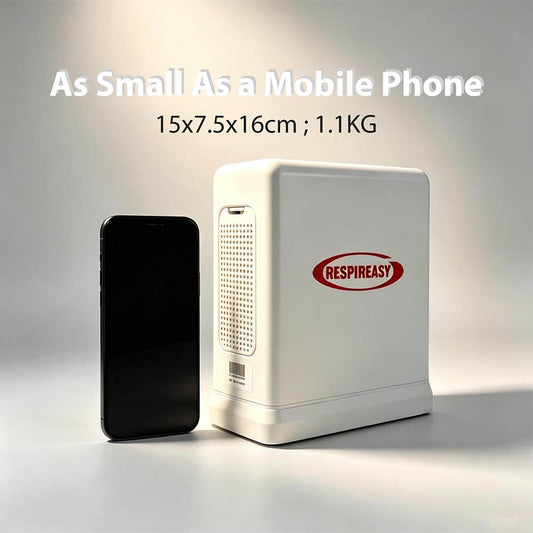
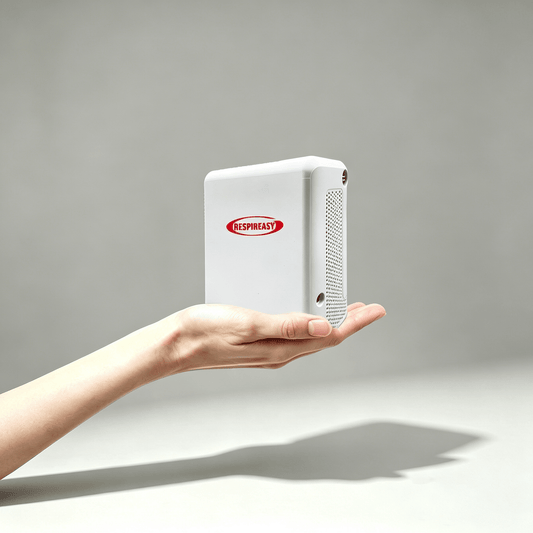
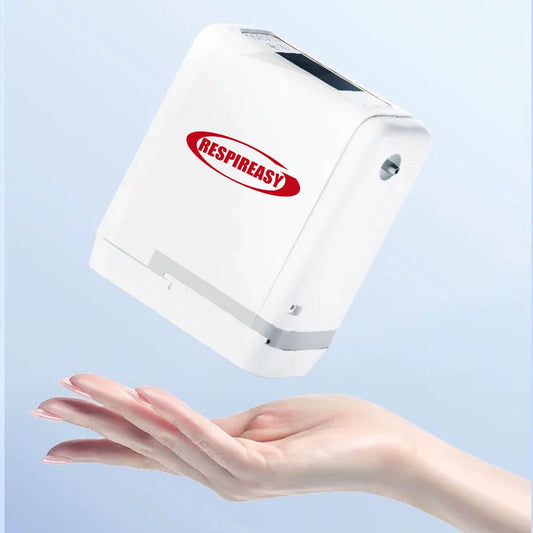
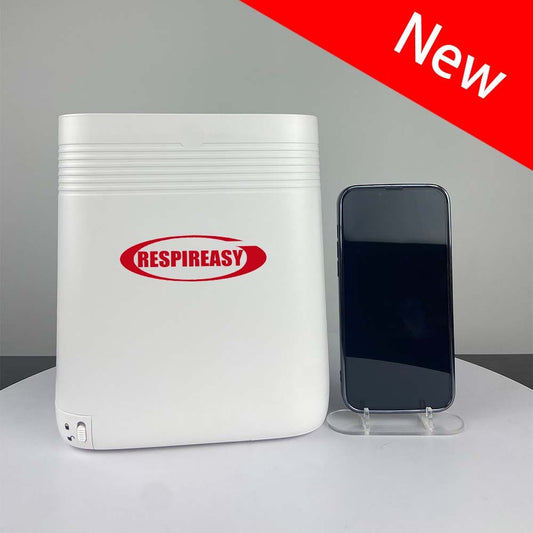
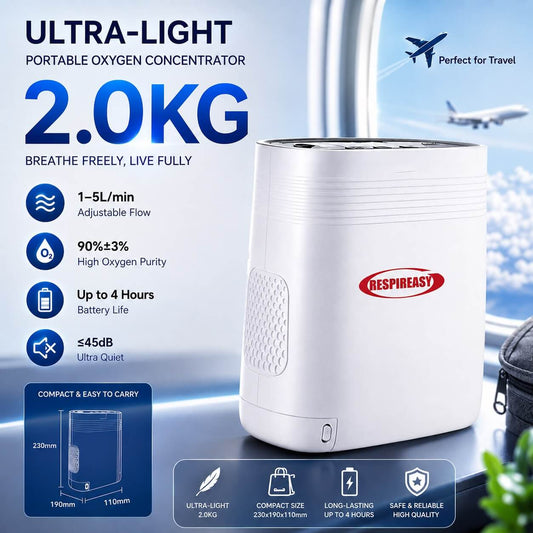
- Weighing just 2.25 kg (4.96 lbs), the unit offers far greater flexibility than traditional stationary models. A common drawback of standard home oxygen concentrators is that they are often too bulky to be taken anywhere. In contrast, the RESPIREASY REC-9 weighs only 2.25 kg and comes with a dedicated portable backpack. It can be easily placed in a living room or bedroom, or carried along for a walk, a short trip, or a road journey—perfectly demonstrating the versatility required for an oxygen concentrator designed for both home and outdoor use.
- The operation is simple and intuitive; elderly users can learn to use it in just 5 to 10 minutes. It supports three power supply modes: direct AC power, in-car charging, and a detachable battery. With a battery life of 5 hours on the lowest setting, you won’t have to worry about running out of power during high-altitude travel or long-distance road trips. It is also airline-approved, making it suitable for those who require oxygen therapy while traveling at high altitudes.
- Unlike stationary oxygen concentrators—which are confined to a single room, stop working during a power outage, and are often too heavy (over 10 kg) to move—the RESPIREASY REC-9 portable oxygen concentrator allows for a seamless transition between home use and travel. Offering an experience comparable to $10,000 imported premium models at a $3,000 price point, this single device is sufficient to meet the portable oxygen therapy needs of 90% of households.
Cost-Performance: DEDAKJ Y-5 Portable Oxygen Concentrator
In a nutshell: Backed by the deep technical expertise of a German brand, it delivers a consistent and stable oxygen supply.
Recommendation Rating: ★★★★
Reference Price: $790


DEDAKJ has long been established in the portable oxygen concentrator market. The Y-5 model features a highly sensitive algorithm that ensures a prompt oxygen supply—a capability well-regarded among imported models—triggering oxygen delivery the instant the user inhales. Weighing 2.3 kg, the unit supports three power sources: direct AC power, a lithium battery, and in-car charging, with a battery life of 4.5 hours on the lowest setting. While the official oxygen concentration is rated at 93% ±3%, actual testing shows it consistently stays between 90% and 93%; it remains stable on lower settings, with slight fluctuations observed at higher settings.
It is rated for use at altitudes up to 4,000 meters and holds FDA, EU CE, ISO, and airline transport certifications, allowing it to be taken on board aircraft. This model is ideal for adult users who have a limited budget, prefer an imported brand, prioritize a continuous oxygen flow, and require a device for daily oxygen therapy at home.
Value-for-Money Oxygen Concentrator Reviews: DEDAKJ DE-2A
Recommendation in a nutshell: Intuitive operation; a desktop design ideal for stationary home use.
Recommendation Rating: ★★★
Reference Price: $390


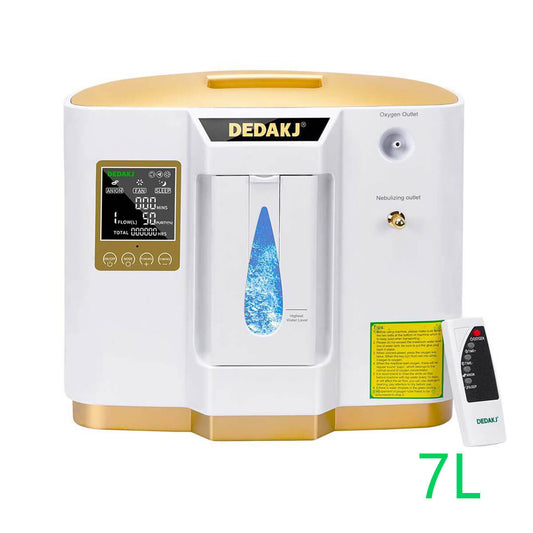
The DEDAKJ DE-2A is a standard desktop oxygen concentrator. Weighing 8.0 kg, it is best suited for a fixed location. It features a large touchscreen with a straightforward menu, making it easy for elderly users to operate. It utilizes fully automated molecular sieve filling technology; while the manufacturer claims an oxygen concentration of 93% ± 3%, our testing showed a range of 89% to 93%.
It offers a flow rate of 1–9 L/min, operates at a noise level of 40 dB, and includes a 9-layer filtration system. It shuts down automatically during a power outage, lacks a built-in battery, and carries only basic certifications. It is a suitable choice for elderly users who need a stationary home unit, prefer a large-screen interface, and are familiar with the brand—all at a reasonable price point of just over $300. However, it is not a viable option if you anticipate needing the device for travel, trips to high-altitude regions, or other mobile scenarios.
Frequently Asked Questions About Oxygen Concentrator Pricing and Purchasing
1. What is the actual difference between an oxygen concentrator that costs a few hundred dollars and one that costs several thousand?
The differences lie in the stability of oxygen concentration, the effectiveness of filtration, and noise control. Lower-cost units (in the hundreds of dollars) often only meet performance standards at their lowest settings; at higher flow rates, the oxygen concentration tends to drop significantly. They also feature fewer filtration layers, which can result in an uncomfortable, "harsh" airflow. In contrast, a $3,000-tier device—such as the RESPIREASY REC-9 portable oxygen concentrator—maintains stable oxygen concentration across all flow settings, utilizes 12 layers of filtration, and operates at a quiet 40 dB, offering a noticeably superior user experience.
2. Can a $3,000 portable oxygen concentrator meet daily oxygen therapy needs?
It depends on the usage scenario. For routine low-flow oxygen therapy at home, supplemental oxygen after physical activity, or as a backup for travel to high-altitude areas, a $3,000-tier portable unit is more than sufficient. The RESPIREASY REC-9, for example, provides an equivalent flow rate of 9 L/min, an oxygen concentration of 93% ± 3%, and stable oxygen delivery at altitudes of up to 6,000 meters—specifications that cover the vast majority of home-use requirements. 3. How to choose between a portable oxygen concentrator and a stationary (desktop) model?
Choose a portable oxygen concentrator if you need it for travel, trips to high-altitude regions, or supplemental oxygen during daily activities for the elderly. Opt for a stationary (desktop) model for home use, situations requiring a high, continuous flow of oxygen, or for individuals who are bedridden. These two types serve different purposes; one does not simply replace the other. If you can only purchase one, prioritize the option that best suits the scenarios where you will use it most frequently.
3. How to get the best value when buying an oxygen concentrator? Performance insights and tips to avoid common pitfalls
When it comes to the cost of a home oxygen concentrator, a higher price does not necessarily mean better quality, nor does a lower price always guarantee the best value. For versatile, multi-scenario use—such as travel to high altitudes or daily oxygen therapy for the elderly—the RESPIREASY REC-9 portable oxygen concentrator is an excellent choice; priced at around $3,000, it offers high-altitude, specialized-care-level performance, stable oxygen concentration across all flow settings, and a comfortable, non-irritating delivery system. For intensive, long-term oxygen therapy at home, choose a stationary model. If you have a larger budget and prioritize brand reputation and support, consider imported brands; if your budget is very limited and you only need a temporary solution, opt for an entry-level model. It is more important to spend your money wisely than to simply spend more—finding the right fit is far more valuable than a high price tag.