Frequently Asked Questions About Home Oxygen Concentrators
1. What size home oxygen concentrator do I need?
The right oxygen concentrator depends on your prescribed oxygen flow rate rather than simply choosing the highest-capacity model.
For example:
· 1–2 LPM models may be appropriate for users who require lower oxygen flow as prescribed by their healthcare provider.
· 3–5 LPM models are commonly used for long-term home oxygen therapy.
· 8–10 LPM models are intended for users with higher prescribed oxygen requirements.
Always consult your healthcare provider before selecting an oxygen concentrator, as using an incorrect flow rate may reduce the effectiveness of your prescribed oxygen therapy.
2. Is a 5L oxygen concentrator better than a 3L oxygen concentrator?
Not necessarily.
A higher oxygen flow rate does not automatically provide better oxygen therapy. The best oxygen concentrator is the one that delivers your prescribed oxygen flow while maintaining stable oxygen concentration.
If your prescribed oxygen flow is 2 LPM, purchasing a 10 LPM machine generally offers no additional benefit and may increase cost, energy consumption, and operating noise.
3. Can I sleep with a home oxygen concentrator?
Yes—if your healthcare provider has prescribed overnight oxygen therapy.
Most stationary home oxygen concentrators are designed for extended daily operation, making them suitable for overnight use when operated according to the manufacturer's instructions.
For bedroom use, many users prefer models with operating noise below 45 dB to minimize sleep disturbance.

DEDAKJ 9 LPM Powerful Home Oxygen Concentrator 93% High Purity Portable Continuous Flow Rate Travel Oxygen Concentrator DE-2A
4. Can a home oxygen concentrator run continuously?
Many high-quality home oxygen concentrators are designed for continuous operation and can run for extended periods when properly maintained.
To help ensure reliable performance:
· Keep air vents unobstructed.
· Clean or replace filters as recommended.
· Follow the maintenance schedule in the user manual.
· Operate the machine in a well-ventilated environment.
Refer to the manufacturer's specifications for the recommended operating conditions of your specific model.
5. How often should I replace the oxygen concentrator filter?
Filter replacement intervals vary depending on the model and the environment in which the machine is used.
Dusty environments may require more frequent cleaning or replacement.
Always follow the maintenance schedule provided by the manufacturer and use genuine replacement parts whenever possible.

DEDAKJ Original Oxygen Accessory--Air Filter de1a 1b 2a 3.5cm (Original Oxygen Parts of dedakj Oxygen Concentrator)
6. Do I need distilled water in the humidifier bottle?
If your oxygen concentrator uses a humidifier bottle, many manufacturers recommend using distilled water to help reduce mineral buildup and keep the humidifier clean.
The water should be replaced regularly, and the humidifier bottle should be cleaned according to the manufacturer's instructions.
7. Can two people use one oxygen concentrator?
Some home oxygen concentrators include dual oxygen outlets, allowing two users to connect simultaneously.
However, whether two people can safely use the same machine depends on:
· The concentrator's maximum oxygen output.
· Each user's prescribed oxygen flow rate.
· The manufacturer's specifications.
Consult your healthcare provider before sharing an oxygen concentrator.

8. What is the difference between continuous flow and pulse flow?
Continuous-flow oxygen concentrators provide oxygen continuously, regardless of breathing patterns, making them a common choice for home oxygen therapy and overnight use.
Pulse-flow oxygen concentrators deliver oxygen only when inhalation is detected. This design is commonly used in portable oxygen concentrators because it helps conserve battery power.
The appropriate delivery method depends on your prescribed oxygen therapy.
9. How long does a home oxygen concentrator last?
With proper maintenance, a quality home oxygen concentrator can provide years of reliable service.
Its lifespan depends on several factors, including:
· Frequency of use
· Maintenance routine
· Operating environment
· Compressor quality
· Filter care
Regular cleaning and timely replacement of consumable parts can help maximize performance over time.
10. How much electricity does a home oxygen concentrator use?
Power consumption varies by model, oxygen output, and compressor design.
Many modern home oxygen concentrators are engineered to balance stable oxygen delivery with energy efficiency, making them suitable for daily use.
Check the product specifications for the rated power consumption of the model you are considering.
11. Where should I place a home oxygen concentrator?
For optimal performance, place the concentrator:
· On a stable, level surface.
· In a clean, dry, well-ventilated room.
· At least several inches away from walls or furniture to allow proper airflow.
· Away from heat sources, open flames, and excessive moisture.
Following the manufacturer's installation recommendations helps maintain efficient operation.
12. Why choose a DEDAKJ home oxygen concentrator?
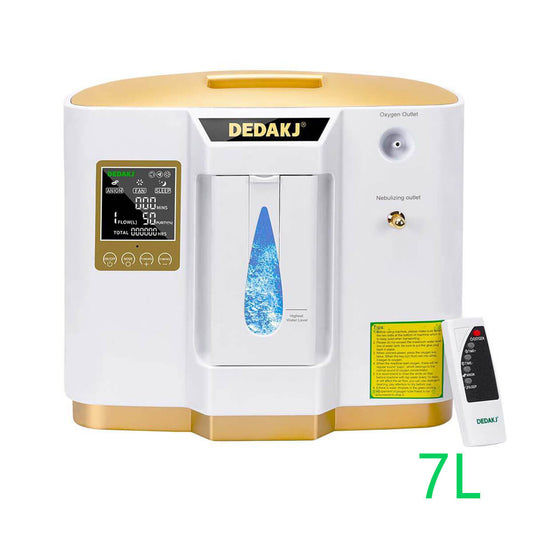
When comparing home oxygen concentrators, consider more than just the advertised oxygen flow rate. The DEDAKJ Home Oxygen Concentrator Series is designed to combine stable oxygen concentration, user-friendly controls, quiet operation, and practical features for everyday home use.
Depending on the model, features may include:
· PSA oxygen generation technology
· Continuous-flow oxygen delivery
· Large LED touch display
· Quiet operation
· Integrated nebulizer (selected models)
· Dual oxygen outlets
· Intelligent safety protection
· Compact, home-friendly design
Choose the model that best matches your prescribed oxygen therapy needs and daily lifestyle.
Final Thoughts
Choosing the right home oxygen concentrator is about finding the best balance between comfort, reliability, and long-term value.
Instead of focusing only on the highest oxygen flow rate, pay close attention to oxygen concentration, continuous-flow performance, operating noise, ease of maintenance, and product certifications. These factors play a significant role in ensuring consistent performance and a better overall user experience.
Whether you're purchasing a home oxygen concentrator for yourself or a loved one, taking the time to compare features and understand your oxygen therapy needs can help you make a more informed decision.
At DEDAKJ, we're committed to providing reliable home oxygen solutions designed with user comfort, quality, and safety in mind. Explore our range of home oxygen concentrators to find the model that best fits your lifestyle and oxygen therapy requirements.