How to Choose the Best Home Oxygen Concentrator
Choosing the best home oxygen concentrator involves much more than comparing prices or selecting the model with the highest oxygen flow rate.
The right oxygen machine should provide:
- Stable oxygen concentration
- Reliable performance
- Quiet operation
- Suitable oxygen flow
- Features that match your daily oxygen therapy needs
Before making a purchase, consider the following factors carefully.

1. Choose the Right Oxygen Flow Rate
Oxygen flow rate is one of the first specifications buyers notice. It is usually measured in liters per minute (LPM).
The flow rate determines how much oxygen the concentrator delivers each minute.
However, a higher flow rate does not always mean better oxygen therapy. The correct choice depends on your prescribed oxygen requirements.
What Does LPM Mean?
LPM (Liters Per Minute) measures the volume of oxygen delivered by the concentrator every minute.
Common home oxygen concentrators include:
| Flow Rate | Typical Application |
|---|---|
| 1–2 LPM | Low-flow oxygen needs |
| 3–5 LPM | Common home oxygen therapy |
| 8–10 LPM | Higher oxygen requirements |
1–2 LPM Oxygen Concentrators
Lower-flow models may be suitable for:
- Older adults requiring low-flow oxygen therapy
- Daily home oxygen supplementation
- Temporary recovery periods when recommended by healthcare professionals
- Users looking for compact and energy-efficient machines
Advantages:
✓ Lower electricity consumption
✓ Smaller footprint
✓ Quieter operation
✓ Easier placement in bedrooms or apartments
3–5 LPM Oxygen Concentrators
A 3L or 5L oxygen concentrator is one of the most common choices for long-term home oxygen therapy.
These models may be used for people with:
- COPD
- Chronic bronchitis
- Pulmonary fibrosis
- Bronchiectasis
- Other chronic respiratory conditions
Advantages:
- Stable continuous oxygen output
- Suitable for long daily operation
- More flexibility if oxygen needs change
8–10 LPM Oxygen Concentrators
Higher-flow oxygen concentrators are designed for users with greater oxygen requirements.
Because these machines are usually:
- Larger
- Heavier
- More power-consuming
they should generally be selected only when recommended by a healthcare provider.

2. Oxygen Concentration Is More Important Than Maximum Flow Rate
Many buyers focus only on LPM. However, oxygen purity is one of the most important performance indicators.
A machine that provides high flow but unstable oxygen concentration may not deliver effective oxygen therapy.
What Is Oxygen Concentration?
Oxygen concentration refers to the percentage of oxygen contained in the delivered gas.
Room air contains approximately 21% oxygen. Oxygen concentrators use PSA molecular sieve technology to separate nitrogen and increase oxygen concentration.
Most high-quality home oxygen concentrators provide:
90%–96% oxygen concentration
Many medical-grade devices are rated:
93% ± 3% oxygen purity
Why Stable Oxygen Purity Matters
When comparing models, check:
- Oxygen concentration at rated flow
- Continuous operation capability
- PSA technology
- Oxygen monitoring system
- Purity testing standards

3. Continuous Flow vs Pulse Flow Oxygen Delivery
The oxygen delivery method is another key consideration.
Continuous Flow Oxygen Concentrators
Continuous flow machines deliver oxygen continuously regardless of breathing pattern.
Advantages:
- Stable oxygen delivery
- Suitable for overnight oxygen therapy
- Compatible with humidifiers and respiratory accessories
- Ideal for long-term home use
Pulse Flow Oxygen Concentrators
Pulse-dose systems deliver oxygen only when inhalation is detected.
Advantages:
- Smaller size
- Lower power consumption
- Longer battery life
- Better portability
Pulse flow is commonly found in portable oxygen concentrators.

4. Quiet Operation Improves Daily Comfort
Home oxygen concentrators often operate for many hours every day.
Noise level affects:
- Sleep quality
- Comfort
- Family environment
Recommended noise levels:
- Below 50 dB: Comfortable daytime operation
- Below 45 dB: Better for bedrooms and overnight use
5. Energy Efficiency for Long-Term Operation
Many oxygen concentrators operate several hours daily.
Important factors include:
- Power consumption
- Compressor efficiency
- Heat dissipation
- Continuous operation capability
An efficient machine balances:
- Oxygen output
- Reliability
- Electricity usage
- User comfort
Buying Checklist Before Choosing a Model
Before purchasing, ask:
✓ What oxygen flow rate do I need?
✓ Does the machine maintain stable oxygen purity?
✓ Is continuous flow suitable for my needs?
✓ Is the noise level acceptable?
✓ Is it designed for long-term home use?
✓ Is maintenance convenient?
Essential Features to Look for in a Home Oxygen Concentrator
6. Size, Weight, and Mobility
Although home oxygen concentrators are mainly designed for indoor use, size and weight still affect daily convenience.
A compact machine is easier to:
- Move between rooms
- Place beside a bed
- Store
- Transport indoors
Example:
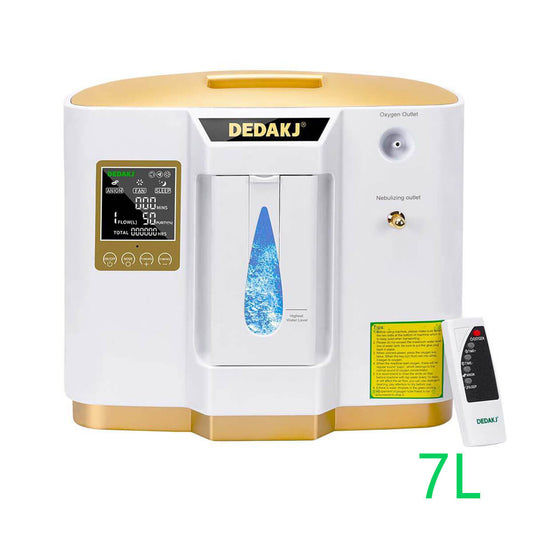
- Dimensions: 360 × 196 × 343 mm
- Weight: Approximately 6.2 kg (13.7 lb)
- Built-in carrying handle
7. Humidification Function
Long-term oxygen therapy may cause:
- Dry nose
- Dry throat
- Discomfort
A humidifier bottle adds moisture to oxygen before delivery.
Benefits:
- Reduces nasal dryness
- Improves comfort
- Supports longer oxygen sessions
8. Nebulizer Function
Some oxygen concentrators combine oxygen therapy and nebulization.
A nebulizer converts liquid medication into a fine mist for inhalation.
Example:
Features:
- 2-in-1 Oxygen Concentrator & Nebulizer
- Oxygen therapy mode
- Nebulization mode
9. Dual User Oxygen Outlet
Some home oxygen concentrators provide two oxygen outlets.
Useful for:
- Couples
- Elderly family members
- Shared household situations
However, users should ensure total oxygen demand stays within machine capacity.
10. Easy-to-Read Display
Important features:
- Large LED display
- Clear icons
- Oxygen purity information
- Timer display
- Alarm notifications
Example:
DEDAKJ DE-Q1W includes a large LED touchscreen.
11. Remote Control
Remote controls improve convenience for users with limited mobility.
Common functions:
- Power control
- Timer adjustment
- Flow adjustment
- Mode selection
Example:
DEDAKJ DE-Q1W infrared remote:
- Range up to 20 meters (66 feet)
12. Maintenance and Filter Replacement
Regular maintenance helps maintain performance.
Checklist:
✓ Clean filters regularly
✓ Replace consumables when required
✓ Clean humidifier bottle
✓ Keep air vents unobstructed
✓ Follow manufacturer instructions
13. Safety Features
Important safety protections include:
- Overheating protection
- Compressor overload protection
- Oxygen concentration monitoring
- Fault alarms
- Automatic shutdown protection
Example:
DEDAKJ DE-Q1W includes intelligent monitoring and safety protection systems.