5 Misconceptions & Scientific Fixes for DEDAKJ Oxygen Concentrators

As a vital respiratory device for home oxygen therapy and high-altitude emergency situations, the proper use of DEDAKJ oxygen concentrators directly impacts both oxygen delivery efficiency and patient safety.
However, clinical observations and user feedback indicate that over 60% of device malfunctions and deviations in therapeutic efficacy stem from misconceptions regarding operation and storage.
Drawing upon the 《Clinical Application Guidelines for Medical Molecular Sieve Oxygen Concentrators》, this article identifies five typical errors—complete with analyses of their underlying causes and standardized operational guidelines—to help users achieve "safe and efficient oxygen usage."
Misconception #1
Neglecting to Clean the Air Intake Filter, Allowing Dust to Accumulate
Failing to clean or replace the air intake filter after prolonged use—or even removing and permanently discarding it.
Potential Risks
Increased air intake resistance places an excessive load on the compressor, thereby shortening the device's service life (data indicates that a clogged filter causes the motor temperature to rise by 20%–30%). Impurities are carried into the molecular sieve by the airflow, thereby reducing oxygen separation efficiency (oxygen concentration may drop from the standard 93% ± 3% to below 85%).
This creates a breeding ground for bacteria and contaminates the output gas, posing an infection risk—particularly for individuals with compromised immune systems, such as those suffering from COPD.
Correct Practice
Cleaning Frequency: For home-use units, it is recommended to gently brush dust off the surface of the filter screen weekly using a soft-bristled brush. Monthly, soak the filter in a neutral detergent (such as dish soap) for 10 minutes, then rinse thoroughly and allow it to air dry.
Replacement Cycle: Medical-grade, high-density filter screens should be replaced every 2 to 4 months (adjusting the frequency based on the dust levels in the operating environment). Refer to the device's user manual for the specific model and specifications when purchasing original manufacturer replacement parts.
Misconception #2
Arbitrarily adjusting oxygen flow rates in a blind pursuit of "high concentration."
Believing that "higher flow rates yield better oxygen therapy results," users independently increase the flow rate to over 5 L/min—a level far exceeding their physician's prescription or the device's rated operating range.
Potential Risks
The "nominal flow rate" of an oxygen concentrator (e.g., 1–5 L/min) corresponds to a specific oxygen concentration (typically 90%–96%). Flow rate and concentration are inversely related: when the flow rate exceeds the device's designed threshold, the molecular sieve is unable to fully adsorb nitrogen, causing the oxygen concentration to plummet (for example, a certain brand's 5L unit may yield a concentration of only 82% when operated at 6 L/min). Furthermore, administering oxygen at excessively high flow rates can lead to carbon dioxide retention (particularly in patients with COPD), triggering adverse reactions such as dizziness and drowsiness.
Correct Guidance
Adhere to Medical Instructions: Patients with chronic conditions must strictly adjust the flow rate according to their physician's prescription (e.g., COPD patients typically require 1–2 L/min; those with severe hypoxia may require 2–3 L/min). in);
Dynamic Monitoring: Use a model equipped with a concentration display to ensure the output oxygen concentration remains ≥90% (for devices without a display, a simple assessment can be made using the "nasal cannula method": during inhalation, the absence of any distinct sensation of airflow impact within the nasal cavity indicates an appropriate flow rate).
Misconception #3
Storage in Humid Environments: Neglecting Moisture and Mold Prevention
Placing the oxygen concentrator in environments with humidity levels exceeding 70%—such as bathrooms or basements—or failing to implement moisture-proofing measures when the device is left unused for extended periods.
Potential Risks
The core components of the oxygen concentrator (specifically the molecular sieves and circuit boards) are highly sensitive to humidity.
If the molecular sieves absorb moisture, their capacity to adsorb nitrogen diminishes, resulting in a reduction in oxygen output.
Condensation forming on the circuit boards can trigger short circuits, potentially burning out the control module (repair costs for which typically amount to approximately 30% of the device's original purchase price).
Metal components on the device casing may corrode, compromising the unit's airtightness.
Correct Practice
Storage Environment: Select a location that is dry (maintaining a humidity level between 40% and 60%), well-ventilated, and shielded from direct sunlight (e.g., on the upper shelf of a living room storage cabinet); ensure the device is positioned away from heating units or air conditioning vents.
Handling for Long-Term Disuse: Unplug the power cord, remove the humidifier bottle and completely empty any accumulated water, cover the main unit with a dust cover, and power on and run the device for 30 minutes once a month to expel any internal moisture.
Misconception #4
Continuous High-Load Operation: Neglecting Intermittent Maintenance
Operating the device continuously for 24 hours (e.g., providing uninterrupted oxygen supply throughout the night while sleeping), or running a single session for more than 8 hours without powering down for a rest period.
Potential Risks
As the "heart" of the oxygen concentrator, the compressor is susceptible to the following issues when subjected to prolonged, full-load operation:
1. Accelerated consumption of lubricating oil and exacerbated wear on internal components (potentially shortening the device's overall service life by approximately 40%).
2. Poor heat dissipation, which may trigger the device's overheat protection system and force an automatic shutdown. (particularly common during the summer);
3. Increased energy consumption (continuous operation consumes 25% more electricity than intermittent operation).
Correct Practice
Principle of Intermittent Use: In non-emergency situations, it is recommended to shut down the device for 30 minutes after 4–6 hours of continuous operation to allow the compressor to cool down.
Sleep Mode Optimization: Choose models equipped with a "timer shut-off" function (e.g., those that automatically switch to a lower flow rate at night), or utilize a dual-level ventilator in conjunction with the oxygen concentrator (to reduce the duration for which the oxygen concentrator operates independently).
Misconception #5
Ignoring Alarms and Forcing Continued Use
When the device triggers alarms such as "Low Oxygen Concentration," "Clogged Filter," or "Overheating," users ignore the warnings—failing to troubleshoot the underlying cause—and simply press and hold the mute button to continue using the device.
The effective performance of an oxygen concentrator depends one-third on the device's technical capabilities and two-thirds on proper usage. Avoiding the aforementioned misconceptions—fundamentally by adopting an "prevention-first, dynamic adjustment" mindset toward oxygen therapy—requires prioritizing regular maintenance over "repairing only when broken," and favoring scientific configuration over "blind operation." Only then can the oxygen concentrator truly serve as a guardian of your health.
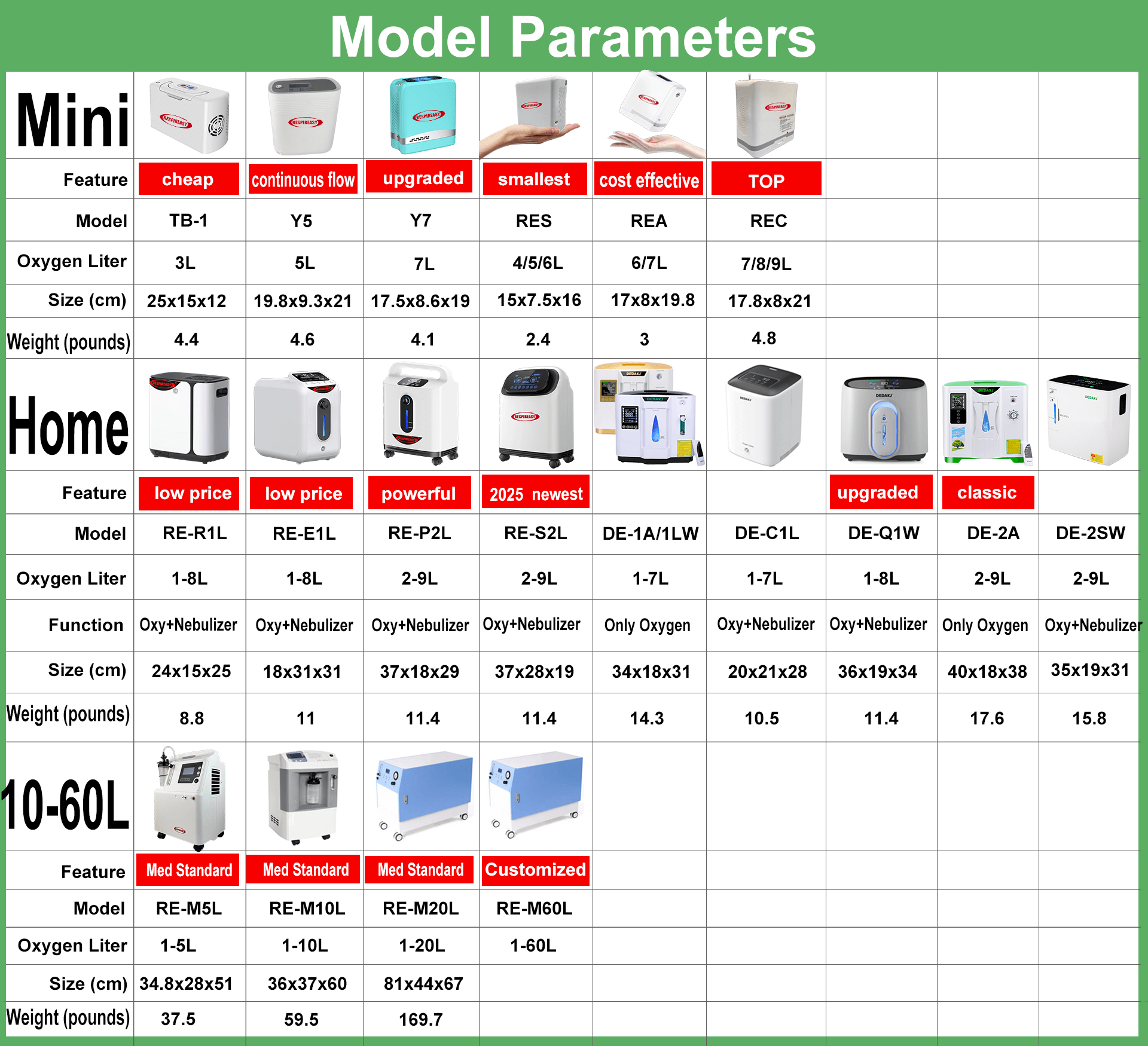
2026 Recommended Oxygen Concentrators

👉Portable Oxygen Concentrators – Ideal for travel, driving and outdoor mobility.
https://dedakjoxygenconcentrators.com/collections/mini-portable-oxygen-concentrator-with-rechargeable-battery

👉Home Oxygen Concentrators – Continuous, quiet, and stable oxygen for daily therapy.
https://dedakjoxygenconcentrators.com/collections/home-use-oxygen-concentrator
👉High-Flow / Medical Oxygen Generators – Powerful options for clinics and high-demand needs (10–60 L/min).
https://dedakjoxygenconcentrators.com/collections/medical-5l-10l-oxygen-concentrator

👉Oxygen Accessories & Parts – Cannulas, filters, humidifiers, and oxygen replacement items.
https://dedakjoxygenconcentrators.com/collections/oxygen-concentrator-dedakj-accessory